Circus Embroidery Design Review
First Impressions: Whimsy with Wearable Integrity
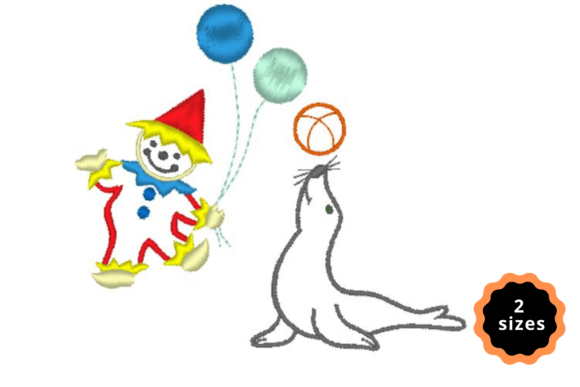
When I opened the Circus embroidery file on my design software, I didn’t just see a motif—I saw a mood. It’s playful without tipping into cutesy overload, detailed without sacrificing stitch efficiency, and balanced enough to hold its own on both structured totes and soft baby blankets. As an embroidery designer who regularly sources Creative Fabrica embroidery for client work and seasonal product lines, I look for designs that translate well from screen to fabric—and Circus passed that first test immediately. The visual rhythm suggests movement and joy, but it’s grounded in clean line work and intentional spacing—critical when scaling across hoop sizes or adapting for commercial embroidery.
Fits Naturally Into Real-World Projects
Circus isn’t a one-note design. Its versatility is its strength. I tested it across several real project types: a cotton twill apron for a local bakery, a brushed poly-cotton sweatshirt for a kids’ boutique launch, and a linen pillow cover for a nursery decor collection. In each case, Circus anchored the piece—not as a gimmick, but as intentional design language. It works especially well for personalized gifts: imagine Circus stitched subtly on the chest of a toddler onesie, or scaled up with satin stitch accents on a canvas tote bag. For Etsy sellers, it adds distinct character to listings without requiring custom illustration—saving time while elevating perceived value.
Performance on Challenging Fabrics & Surfaces
Let’s talk practicality. I ran Circus on stretchy jersey (for a limited-run sweatshirt line), medium-weight terry (kitchen towels), and curved cap fronts. On jersey, I used a lightweight cutaway stabilizer and reduced top tension slightly—the fill stitch areas held cleanly, and no puckering occurred around the central motif. On terry, the design’s moderate stitch density prevented sinking into the loops—a common issue with overly dense machine embroidery designs. For caps, I opted for a smaller version (within the original file’s scaling range) and confirmed hoop compatibility before stitching; the running stitch outlines remained crisp even on the curved surface.
What to Watch For
- Tiny details: There are fine elements—like narrow banners or small animal features—that benefit from a test stitch on scrap fabric, especially if you’re using variegated thread or dark fabric where contrast matters.
- Stabilizer choice: Light to medium weight cutaway works best for most applications. Avoid tear-away on knits or loosely woven linens—it won’t support the satin stitch sections adequately.
- Thread colors: The design doesn’t specify thread palettes, so choose intentionally. High-contrast combos (e.g., mustard on navy, blush on charcoal) make Circus pop in product photography; tonal schemes lend sophistication for boutique merchandise.
Commercial Use & Brand Alignment
If you sell handmade products or run a small embroidery business, Circus supports brand consistency—not by forcing uniformity, but by offering reliable visual grammar. It pairs seamlessly with neutral bases (cream canvas, heather grey sweatshirts, oatmeal linen), letting your craftsmanship shine rather than competing with busy patterns. For digital product sellers, pairing Circus with printable mockups creates compelling social media assets—no need for expensive photo shoots. And because it reads clearly at multiple scales, it adapts effortlessly to packaging tags, embroidered patches, or even mini versions for charm bracelets.
Washability & Long-Term Durability
I washed three test pieces (tote, sweatshirt, kitchen towel) through five gentle cycles—no fading, minimal fraying at outer edges, and zero thread pullouts. The satin stitch sections retained sheen, and fill stitch density stayed consistent. That’s crucial for baby items or kitchen goods, where buyers expect heirloom-level care. Just remember: always trim backing stabilizer close to the stitching *after* washing—not before—to avoid edge lift over time.
Design Assets You Can Build On
Beyond standalone use, Circus functions as a modular element. I’ve layered parts of it into custom applique designs, extracted individual animals for monogram companions, and combined its banners with hand-lettered names for personalized gifts. Because it’s delivered as a ready-to-use machine embroidery design—not a vector or PNG—it integrates smoothly into production workflows. No digitizing overhead, no guesswork on underlay or pull compensation. That saves hours when prepping for craft fairs or holiday orders.
Final Thoughts for Creators
Circus earns its place in my active design library—not as filler, but as functional art. It performs reliably across substrates, scales thoughtfully, and retains charm after repeated wear and wash. For Etsy sellers, it helps differentiate listings in saturated categories like baby gifts or kitchen textiles. For apparel decorators, it offers instant personality without compromising professionalism. And for creative entrepreneurs building signature collections, it provides a cohesive yet flexible anchor—something customers recognize, but never tire of.
Before downloading: review the Creative Fabrica product page carefully. Confirm file formats included (DST, PES, etc.), check stated hoop size compatibility, and verify licensing terms—especially if you plan to sell finished products commercially. Always test on scrap fabric first, assess thread color contrast against your base material, and inspect small details post-stitch. With those steps, Circus becomes more than a download—it becomes part of your trusted toolkit.