Baby Lamb: A Soft, Sweet Embroidery Design That Earns Its Place
As someone who’s stitched hundreds of machine embroidery designs across apparel, baby items, and boutique merchandise — from Etsy bestsellers to custom nursery orders — I approach every new file with quiet scrutiny. Not just “does it stitch?” but “does it work?” When I opened Baby Lamb, my first thought wasn’t about cuteness (though yes — it’s undeniably sweet). It was about how this design would hold up on a real sweatshirt cuff, whether its curves would translate cleanly onto a curved baby onesie seam, and if customers would pause mid-scroll on an Etsy listing just to admire the gentle shape of its ear.
A Design That Feels Like a Hug — Not Just a Graphic
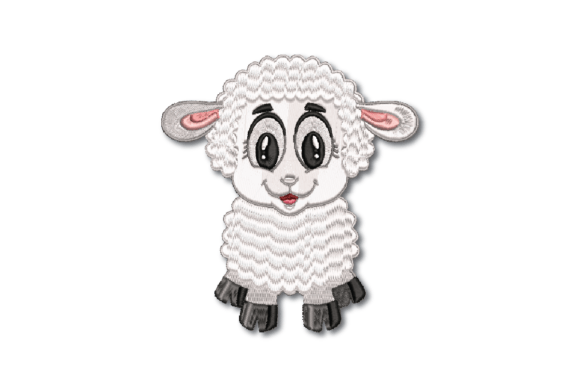
Baby Lamb lands softly: rounded contours, minimal internal detail, and a silhouette that reads clearly at 3–4 inches tall. There’s no fussy facial anatomy or overworked texture — just a clean, friendly profile with subtle curve definition in the fleece and a quiet confidence in its simplicity. It doesn’t shout. It invites. That makes it unusually versatile for embroidery project types where charm matters more than complexity: baby blankets, linen tea towels, organic cotton onesies, and even minimalist aprons for small-batch bakeries or craft studios.
I tested Baby Lamb on a medium-weight cotton twill tote bag — the kind many small shop owners use for branded gift packaging. Stitched at 3.75", it balanced presence and proportion beautifully. The satin stitch along the outer edge held crisp definition without pulling, and the fill stitch in the body stayed smooth, not puffy or dense. No thread nesting. No skipped stitches. Just soft, confident execution — exactly what you want when your customer is paying $48 for a handmade product with a personalized gift tag.
Where Baby Lamb Shines — and Where It Asks for Thoughtful Handling
This isn’t a one-size-fits-all embroidery file. Its strength lies in intentionality — not ubiquity. Here’s where it delivers:
- Custom apparel: Works especially well on crewneck sweatshirts (left chest), relaxed-fit tees, and knit baby bodysuits — as long as fabric tension and stabilizer are dialed in.
- Embroidered patch: Clean lines and modest size make it ideal for iron-on or sew-on patches on denim jackets, backpacks, or nursery wall hangings.
- Baby embroidery: Perfect scale for bibs, burp cloths, and crib mobile accents — its gentle form reads instantly, even at smaller hoop sizes.
- Holiday embroidery: Paired with a tiny sprig of rosemary or a simple “Joy” script, it adds warmth to Christmas stockings or Easter-themed kitchen towels.
- Commercial embroidery: Because it avoids fine detail and tight corners, it stitches reliably across multiple machines — a real plus when fulfilling wholesale orders for boutique branding.
But let’s be direct: Baby Lamb isn’t built for every surface. Avoid it on ultra-thin rayon blends or highly textured bouclé without extra stabilizing — the softness of the design can get lost in the fabric’s noise. On dark fabric, test your thread colors carefully; a pale ecru or heather gray works better than stark white for maintaining its gentle tone. And while it handles curved surfaces like caps reasonably well, skip placing it directly over seams or high-stretch zones unless you’ve confirmed stitch density and underlay behavior on scrap first.
What This Design Says About Your Brand — Before a Single Stitch
When customers see Baby Lamb on your finished product, they’re not just seeing a lamb. They’re reading your attention to mood, material harmony, and thoughtful curation. It signals care — not clutter. That builds trust faster than any description ever could. For Etsy sellers, that translates to higher perceived value and fewer “Is this really handmade?” questions. For craft fair vendors, it helps your booth feel cohesive and intentional — especially when paired with other Baby Animals-adjacent designs that share its calm, unhurried rhythm.
I recently used Baby Lamb as part of a trio of nursery decor pieces — a pillow cover, a framed hoop art print, and a matching set of muslin swaddles. Because the design didn’t compete with background patterns or overwhelm delicate fabric, all three items felt like part of the same quiet story. That consistency? That’s brand architecture in action — no logo required.
Practical Designer Notes — From One Maker to Another
Before stitching Baby Lamb into your next handmade product or client project, here’s what I always do — and recommend you do too:
- Run a sample on the exact fabric and stabilizer combo you’ll use for the final piece. Yes — even if it’s the same fabric you’ve used before. Thread batch variation matters.
- Check contrast in both black-and-white and color mockups. Does it read clearly against light and dark backgrounds? If you’re offering it as a digital embroidery file, include those mockups in your listing.
- Inspect small details at actual stitch-out size — especially the curve of the ear and the base of the neck. Are edges smooth? Is there any unintended pull?
- Confirm licensing terms before using it in products you sell — especially if you’re bundling it as part of a craft business kit or printable resource.
- Test thread colors beyond your first instinct. Sometimes a slightly warmer off-white or a muted oatmeal reads softer and more premium than pure white.
- Use appropriate stabilizer: medium-weight cutaway for knits, tear-away for stable wovens, and a light topping for napped fabrics.
And remember: Any alteration on the file may affect the output. That’s not a warning — it’s respect for the digitizer’s intent. If you need scaling, rotate or reposition thoughtfully. But avoid reshaping paths or deleting stitches unless you’re prepared to re-digitize the balance.
In the end, Baby Lamb isn’t flashy. It doesn’t chase trends. What it does — quietly, consistently, and with genuine craft — is elevate the ordinary. Whether it’s anchoring a personalized gift, anchoring a small shop’s seasonal collection, or simply making a baby’s first blanket feel like love made visible, this embroidery design earns its place by doing less, so the handmade moment feels more.