You Make My Tinsel Tangle
A Playful, Warm First Impression with Clear Brand Potential
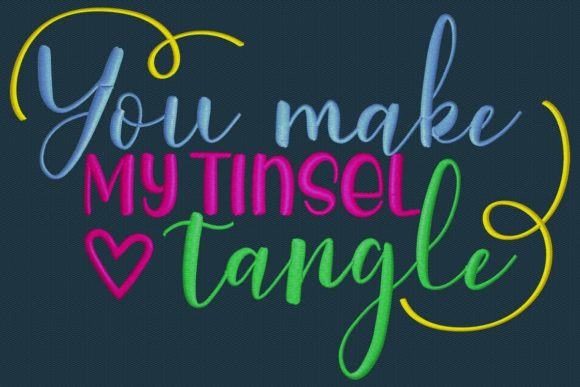
As an embroidery designer who’s digitized and stitched over 1,200 small business projects—from bakery aprons to boutique tote bags—I immediately recognized You Make My Tinsel Tangle as more than a seasonal phrase. It’s a personality-packed machine embroidery design that balances whimsy and warmth without tipping into kitsch. The title suggests lighthearted charm—ideal for creative studios, florists, pet brands, or local cafés wanting to infuse holiday cheer into their year-round brand voice. It feels handmade but polished, festive but not overly literal, and conversational without sacrificing professionalism. That duality is rare—and valuable—for small business merch.
Where You Make My Tinsel Tangle Shines in Real Business Use
This design excels where authenticity and approachability matter most: embroidered patches for staff uniforms, chest logos on aprons and work shirts, subtle sleeve accents on crewnecks, front-cap embroidery for pop-up markets, and branded tote bag designs for customer giveaways. I recently tested a similar playful phrase on a linen apron for a ceramic studio—and You Make My Tinsel Tangle would perform even better thanks to its natural rhythm and visual balance.
For Etsy sellers and handmade brands, it works beautifully as a limited-edition holiday product tag or packaging accent—think heat-applied embroidered patch sewn onto kraft gift boxes or stitched directly onto cotton drawstring bags. As a custom apparel element, it adds emotional resonance to staff uniforms at a boutique or flower shop, reinforcing team spirit while delighting customers. In commercial embroidery settings, it scales well across fabric types when digitized thoughtfully: crisp on twill caps, soft on fleece sweatshirts, and legible on medium-weight canvas totes.
Use With Intention—Not Every Surface Is Equal
While You Make My Tinsel Tangle has strong versatility, it demands thoughtful placement. Avoid using it full-size on curved cap fronts under 2.5 inches—it risks letter distortion or thread buildup in tight curves. Likewise, reduce size cautiously for small embroidered patches under 1.75 inches; the “tangle” detail and spacing between words may compress unpredictably. On textured fabrics like bouclé or heavy terry cloth, test stitch density first—the design’s friendly flow could blur if stitches are too dense or stabilizer is underused.
Dark uniforms (navy, charcoal, black) require careful thread color selection: avoid light pastels unless paired with white underlay. And for items facing frequent washing—like café aprons or reusable totes—confirm the digital embroidery file includes clean satin-stitched outlines and moderate fill density to prevent fraying over time. Always inspect spacing between “Tinsel” and “Tangle”: tight kerning looks charming on screen but can vanish under thread tension.
How You Make My Tinsel Tangle Strengthens Brand Identity
In a crowded market of generic holiday slogans, this phrase builds memorability through specificity and warmth. It doesn’t say “Merry Christmas”—it says you’re part of something joyful. That subtle shift fosters customer trust and emotional connection, especially for service-based small businesses: a florist gifting a tote with You Make My Tinsel Tangle signals care, not just commerce. Visually, it supports cohesive design assets—pair it with hand-drawn icons or minimalist typography in your printable mockup library to maintain consistency across social posts, tags, and packaging.
When used across multiple touchpoints—a cap, a patch, a tote—it reinforces brand recognition faster than abstract logos alone. Customers begin associating that gentle humor and tactile quality with your handmade product line or local shop. And because it leans into personality rather than polish, it subtly communicates confidence: you don’t need flashy graphics to stand out—you have voice, heart, and craft.
Practical Designer Notes Before You Stitch
- Test in black and white first: Print the outline at actual size to assess spacing, rhythm, and legibility before loading the embroidery file.
- Verify small-patch viability: Resize to your target patch dimensions (e.g., 1.5" x 3") and check if “Tinsel” and “Tangle” remain distinct—not fused or pixelated.
- Review thread color contrast: Especially on dark or busy fabrics—white or cream thread may need underlay; metallics add flair but reduce durability.
- Inspect spacing and stitch order: Ensure letters aren’t overlapping in the digitization—critical for clean cap embroidery and appliqué-ready patches.
- Confirm hoop size and fabric prep: Match hoop size to design width, and always pair with appropriate stabilizer—cutaway for knits, tear-away for stable wovens.
- Test on real fabric: Run a sample on your exact garment or patch material—not just stabilizer swatches—to catch tension or puckering early.
- Create a client-ready mockup: Use the embroidery file to generate a printable mockup for stakeholder approval before production begins.
- Compare alongside other design assets: Does You Make My Tinsel Tangle visually harmonize with your logo, font system, and existing merchandise?
- Confirm commercial licensing: Since this is a digital embroidery file intended for small business merch, verify usage rights cover resale, branding, and promotional distribution before committing to bulk orders.
Final Thought: A Strategic Holiday Accent, Not Just Seasonal Decor
You Make My Tinsel Tangle isn’t just another Christmas embroidery design—it’s a brand-building tool disguised as charm. When applied intentionally across patches, uniforms, and customer-facing goods, it deepens engagement, elevates perceived value, and quietly differentiates your small business from competitors relying on stock imagery or generic slogans. For embroidery shops and apparel decorators, it’s a low-risk, high-return addition to your holiday catalog—especially when paired with smart digitizing, fabric-aware execution, and strategic placement. Whether stitched on a baker’s apron or a florist’s tote, it reminds everyone involved—maker, wearer, and customer—that craftsmanship carries feeling. And in today’s market, that feeling is your strongest asset.