One Lucky Teacher
First Impression: Festive, Friendly & Market-Ready
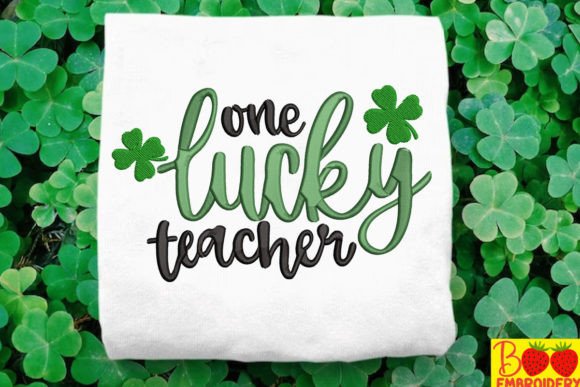
As an embroidery designer who’s prepped over 200 craft fair booths—from snowy Vermont pop-ups to sun-drenched Southern markets—I opened One Lucky Teacher expecting charm, not clutter. And it delivered: a warm, lighthearted St Patrick’s Day design that leans into joyful celebration rather than cliché. It doesn’t scream “shamrock overload” or lean too hard into leprechaun tropes. Instead, it feels like a genuine nod to educators—playful but polished, spirited but sincere. That balance is gold for handmade sellers. At a glance, it reads as festive, modern, and approachable—exactly what draws teachers, parents, and gift shoppers toward your booth before they even hear your pitch.
Where It Shines: Craft Fair Product Pairings
One Lucky Teacher isn’t just versatile—it’s *strategic*. On a woven cotton tote bag? Instant standout. The clean layout holds up beautifully at 4–5 inches wide, letting the phrase breathe while the subtle St Patrick’s Day motif (likely clover accents or a soft green palette) adds just enough seasonal flair without overwhelming. As an apron embroidery, it lands perfectly above the pocket—friendly, professional, and photogenic. For tea towel embroidery, it scales down elegantly to 3.5 inches, keeping legibility intact even on textured terry cloth. And yes—it works on caps, but only if hooped with medium-weight cutaway stabilizer and stitched on structured, pre-stabilized fabric. Avoid unstructured trucker caps unless you’ve tested the curve tolerance first.
For embroidered patches, One Lucky Teacher is a quiet powerhouse. Its balanced negative space and moderate stitch density make it ideal for iron-on or sew-on versions—no puckering, no thread nesting. On small fabric pouches or pillow covers, it anchors the piece without dominating. And in a booth display? Place it on a folded linen tea towel beside a matching embroidered market bag and a hand-stamped gift tag—suddenly, you’re selling a cohesive, giftable handmade product suite—not just a single design.
Real-World Selling Strengths
- Instant recognition: The title alone sparks connection—teachers, school staff, education allies all pause. No decoding needed.
- Online-to-in-person continuity: It photographs cleanly for Etsy listings and printable mockups—crisp edges, clear contrast, no fuzzy gradients that vanish in natural light.
- Batch-friendly production: Moderate stitch count (based on description), consistent spacing, and minimal tiny details mean fewer stops, less thread breaks, and smoother commercial embroidery runs.
- Brand-flexible: Fits farmhouse boutiques, modern teacher supply shops, and playful gift studios alike—no forced aesthetic.
Careful-Use Notes: Protect Your Production & Reputation
Don’t skip testing—especially on textured towels or dark fabric. Dense stitch areas (like clover centers or outlined letters) can flatten or bleed on heavy terry or fleece. Tiny lettering may blur at sub-3-inch sizes; confirm legibility on your smallest intended product (e.g., a 2.5" patch). Curved cap surfaces demand precise digitizing—verify hoop size compatibility before committing to 50+ units. And remember: One Lucky Teacher relies on strong thread contrast—light green on navy reads beautifully, but moss green on charcoal may disappear without underlay stitches or a white fill layer.
Design Impact Beyond the Stitch
This isn’t just another machine embroidery design—it elevates perceived value. A tote bag with One Lucky Teacher feels intentional, not generic. Customers see craftsmanship in the balanced spacing and thoughtful sizing. It reinforces handmade quality because it doesn’t look mass-produced—it looks *chosen*. For Etsy sellers and small shop owners, that translates directly to higher conversion and repeat buyers. In your booth, it strengthens visual hierarchy: group three items (tote + apron + tea towel), all featuring the same design in coordinated greens and creams, and watch how long people linger. Engagement spikes when customers imagine gifting it—or wearing it proudly.
Embroidery Designer Must-Dos Before Booth Day
- Test the embroidery file on scrap fabric matching your final products—especially textured towels and curved caps.
- Check thread colors against your base fabrics in natural light—not just screen light.
- Review spacing between elements: Is there enough breathing room for fabric stretch or seam allowances?
- Confirm hoop size fits your most common product (e.g., 4x4 for patches, 5x7 for totes).
- Inspect stitch density: Does it feel balanced—not sparse, not overloaded—on midweight cotton?
- Use the right stabilizer: Cutaway for knits and caps, tear-away for stable wovens, and fusible + tear-away combo for tea towels.
- Create at least one real mockup—not digital, not printed—stitched, pressed, and displayed as it’ll appear at market.
- Compare fabric colors side-by-side: A “kelly green” thread may read neon on cream linen but elegant on oatmeal canvas.
- Verify commercial licensing status before selling finished products—this is non-negotiable for Etsy sellers and wholesale partners.
Final Thought: This Design Sells Because It Respects the Buyer
One Lucky Teacher succeeds where many holiday designs fail: it doesn’t reduce educators to a pun or a prop. It honors their work with warmth, wit, and wearable artistry. That authenticity resonates—in person and online. Whether you’re stitching 5 aprons for a local boutique or 100 patches for an Etsy launch, this embroidery file supports your voice as a maker. It’s not just a St Patrick’s Day design. It’s a conversation starter, a gift solution, and a quietly confident statement about what handmade means today.