Lover Babe: A Craft Fair Embroidery Review
First Impression: Sweet, Bold, and Instantly Recognizable
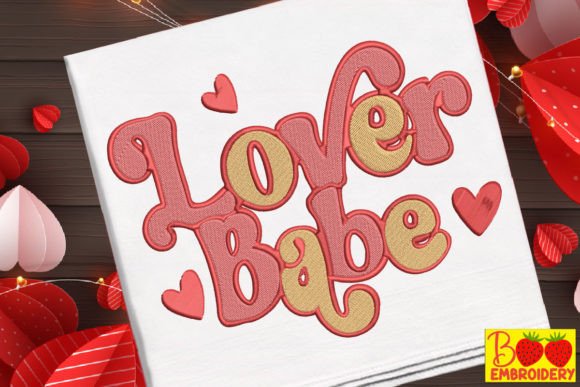
As an embroidery designer who’s prepped over 200 craft fair booths, my gut reaction to Lover Babe is immediate: it’s a confident, playful take on Valentine’s Day—neither overly cutesy nor stiffly formal. The name alone signals warmth and approachability, with just enough modern edge to stand out beside traditional “XOXO” or heart-and-rose motifs. It feels like a handmade product made for real people—not stock clipart dressed up as embroidery. That matters immensely when you’re curating a booth where customers scan dozens of items in under ten seconds.
Where Lover Babe Shines on Craft Fair Products
Lover Babe works exceptionally well across high-visibility, tactile items—exactly what draws eyes and hands at markets. On a natural canvas tote bag? It reads clearly at arm’s length, especially when stitched in rich burgundy or blush thread against oat or navy fabric. As an apron embroidery, it lands perfectly above the pocket—large enough to be legible but not overwhelming next to functional details. For tea towel embroidery, its balanced proportions hold up beautifully on textured terry or linen blends, provided stitch density isn’t excessive.
It also excels as an embroidered patch: small enough to stitch cleanly on denim jackets or drawstring pouches, yet distinctive enough to spark conversation (“Is that from your shop?”). As a pillow cover design or market bag accent, Lover Babe adds personality without competing with bold prints or solid-color backdrops. And yes—it photographs strongly for Etsy seller listings and printable mockups. Its clean lines and intentional spacing translate well to flat-lay shots and lifestyle images.
What Makes Lover Babe Booth-Ready (and Batch-Friendly)
This isn’t a fussy, detail-heavy machine embroidery design. There’s no micro-lettering, no fragile lace fill, no overlapping satin stitches that snag during hooping. That means faster hooping, fewer thread breaks, and consistent results across 30+ tote bags before lunchtime. As a small shop product, Lover Babe scales reliably—from 3.5" wide on a child’s cap to 6.5" on a full apron front—without losing charm or clarity. That flexibility is gold for makers juggling multiple SKUs and tight deadlines.
It’s also commercial embroidery-friendly: no ambiguous licensing language in the description suggests this is intended for finished goods, not just personal use. Still—always confirm commercial rights before listing on Etsy or wholesale platforms. Never assume.
Careful-Use Notes: Where Clarity Meets Craftsmanship
That said, Lover Babe isn’t bulletproof. On thick, napped fabrics like heavy canvas or quilted market bags, dense satin-stitched areas may flatten or lose definition—so test with your exact fabric stack. Likewise, avoid stitching it directly onto highly textured tea towels unless you’ve stabilized aggressively; loose loops can catch on terry loops and fray.
Curved surfaces—like structured caps or rounded pouch seams—require careful digitizing alignment. If the embroidery file wasn’t optimized for caps, letter spacing may distort. Always check spacing and kerning in your embroidery software before committing to a full run.
Dark fabrics demand high-contrast thread—especially if the design includes fine outlines or subtle shading. And while Lover Babe holds up well at medium sizes, avoid shrinking it below 2.75" wide. Tiny lettering loses legibility fast—and at a craft fair, unclear text equals missed sales.
Design Assets That Build Real Buyer Engagement
What makes Lover Babe more than just another Valentine S Day motif is its emotional resonance. It doesn’t shout “romance”—it whispers “connection,” “playfulness,” “self-love.” That nuance translates directly to booth traffic: customers pause longer, ask questions, and often buy multiples (“I need one for my sister, my best friend, and myself”). It supports brand consistency too—if your shop leans into warm, inclusive, handmade energy, Lover Babe reinforces that voice across every product type.
Used thoughtfully, it elevates perceived value. A simple cotton tea towel becomes a giftable handmade product; a plain canvas pouch becomes a curated keepsake. That’s how you turn browsers into buyers—and buyers into repeat customers.
Pro Designer Checklist Before You Stitch
- Test the design on scrap fabric—same weight, same finish, same stabilizer combo you’ll use for production.
- Check thread contrast on both light and dark fabric swatches—don’t rely on screen colors.
- Review spacing and kerning in your embroidery software—tight letters can merge on low-tension runs.
- Confirm hoop size compatibility with your machine and your most-used blanks (e.g., cap hoops vs. flat hoops).
- Inspect stitch density—if fills exceed 12,000 stitches per square inch, consider simplifying or adjusting underlay.
- Use the right stabilizer: cutaway for knits, tear-away for stable wovens, heavy cutaway for towels.
- Create at least one real mockup—not digital. See how it drapes, how light hits the stitches, how it feels in hand.
- Compare fabric colors side-by-side—a “blush” thread can read peach or dusty rose depending on base fabric.
- Confirm commercial licensing before selling any finished product—this is non-negotiable for Etsy sellers and boutiques.
Final Thought: Lover Babe Is Booth Fuel
In a sea of hearts, Cupids, and scripted “Love” designs, Lover Babe stands apart—not because it’s flashy, but because it’s human. It fits seamlessly into a thoughtful craft fair product lineup: versatile enough for cross-category use, strong enough to anchor a display, and warm enough to invite touch and connection. When stitched with intention and tested with care, it doesn’t just decorate fabric—it invites stories. And that’s what sells.