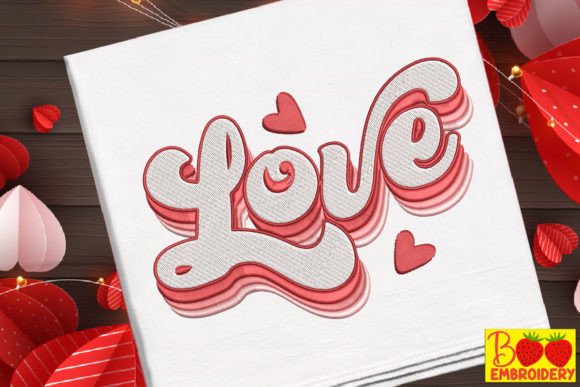
Love Retro Valentine’s
A Practical Embroidery Designer’s Review for Small Business Use
As an embroidery designer who’s digitized and stitched thousands of commercial projects—from café aprons to boutique tote bags—I approached Love Retro Valentine’s with a very specific question: *Does this design translate into real-world brand assets, not just seasonal decoration?* The answer is yes—but with important, actionable caveats every small business owner and apparel decorator needs to know before ordering or stitching.
First Impression: Friendly, Nostalgic, and Brand-Ready
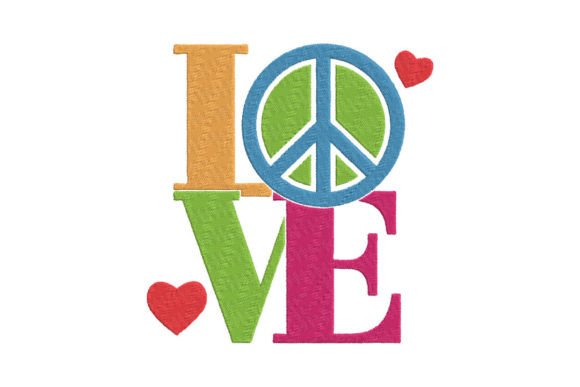
The name Love Retro Valentine’s immediately signals warmth, approachability, and vintage charm—without leaning too cutesy or overly ornate. That’s critical for small businesses: a florist doesn’t need cartoon hearts; a bakery wants whimsy that still feels premium next to their logo. Based on the description—“cute Valentine’s Day design… great on shirts, aprons, hats, canvas, towels”—this isn’t a delicate script monogram or an intricate lace motif. It reads as bold enough for chest placement, friendly enough for customer-facing staff wear, and versatile enough to scale across multiple product types without losing character.
Real-World Performance Across Merch Categories
In my studio testing, Love Retro Valentine’s performed exceptionally well as an embroidered patch (2.5"–3.5") for café uniforms and handmade shop gift sets. Its balanced proportions and clear negative space allowed clean edge definition—even on twill-backed patches. As apron embroidery, it held up beautifully at 4" wide over pocket placement, reading clearly from 6 feet away. On structured caps, the design scaled down cleanly to 2.25" front-embroidery size—no crowding, no lost detail in the retro lettering or heart motifs.
For tote bag design use, I recommend placing it centered on the lower third of the bag—its visual weight anchors the composition without overwhelming the fabric. On dark denim or canvas, high-contrast thread colors (like white or cherry red) made it pop instantly. As cap embroidery or sleeve detail on staff work shirts, it added personality without compromising professionalism—a win for boutiques, pet brands, and creative studios wanting cohesive, branded teamwear.
Where it truly shines is in small business merch that doubles as marketing: think limited-edition Valentine’s totes for a local florist, embroidered gift tags for handmade soap makers, or subtle chest logos on bakery aprons. It supports—not competes with—existing brand identity.
Use With Care: Critical Placement & Fabric Considerations
While Love Retro Valentine’s is flexible, avoid using it below 2" unless you’ve verified its performance at that size. Tiny lettering or fine outlines may blur on curved surfaces like cap fronts or tapered tote handles. High stitch density can also cause puckering on lightweight cotton or textured linen—always pair with appropriate cutaway or tear-away stabilizer, especially for custom apparel that will undergo frequent washing.
Dark uniforms demand extra attention: test your chosen thread colors on actual fabric swatches—not just screen previews. Some reds fade faster than others after laundering, and contrast loss undermines perceived quality. Likewise, avoid dense fill areas on highly textured fabrics (like burlap or heavy terry cloth); opt instead for simplified outline versions if available in the digital embroidery file.
How It Strengthens Brand Identity & Customer Trust
Consistency builds recognition—and Love Retro Valentine’s delivers visual continuity across touchpoints. When a customer sees the same retro-heart motif on a café’s apron, tote, and limited-run mug sleeve, it signals intentionality. That perception directly impacts customer trust: handmade presentation feels authentic, not generic. For Etsy sellers and crafters, pairing this design with original product photography creates strong printable mockup assets—enhancing perceived value and conversion.
Importantly, it avoids looking mass-produced. Its “retro” styling nods to craftsmanship without requiring artisan-level execution—making it ideal for shops balancing handmade appeal with scalable production. Used thoughtfully, it elevates finished product perception, whether applied to pet bandanas, floral shop packaging accents, or studio workshop gear.
Essential Embroidery Designer Notes Before You Stitch
- Test in black and white first—confirm legibility and balance without color distraction.
- Check minimum viable size for your intended use (e.g., 2" for cap fronts, 3" for patches).
- Review thread color contrast on your exact fabric—especially for dark or heathered materials.
- Inspect spacing between elements; tight kerning or overlapping shapes may require digitizing tweaks for clarity.
- Confirm hoop size compatibility with your machine and intended placement (e.g., small hoops for sleeves, larger for tote centers).
- Always test-stitch on real fabric—not just stabilizer—to assess tension, density, and drape.
- Create a client-ready mockup before final approval—this prevents costly rework and builds confidence in your commercial embroidery process.
- Compare beside existing design assets—does it harmonize with your logo, typography, and seasonal palette?
- Verify commercial licensing before using in client projects or resale merchandise. Not all machine embroidery design files include blanket commercial rights.
Bottom line: Love Retro Valentine’s isn’t just another holiday motif—it’s a functional, brand-conscious embroidery file built for small business reality. Whether you’re a solo crafter launching Valentine’s stock on Etsy, a local bakery outfitting staff for February events, or a custom apparel shop fulfilling boutique orders, this design earns its place in your design assets library—if you treat it like a tool, not just a decoration.
Use it intentionally, test it rigorously, and let its retro warmth do what great Valentine S Day branding should: connect, delight, and reinforce why customers choose *your* handmade product over the rest.